

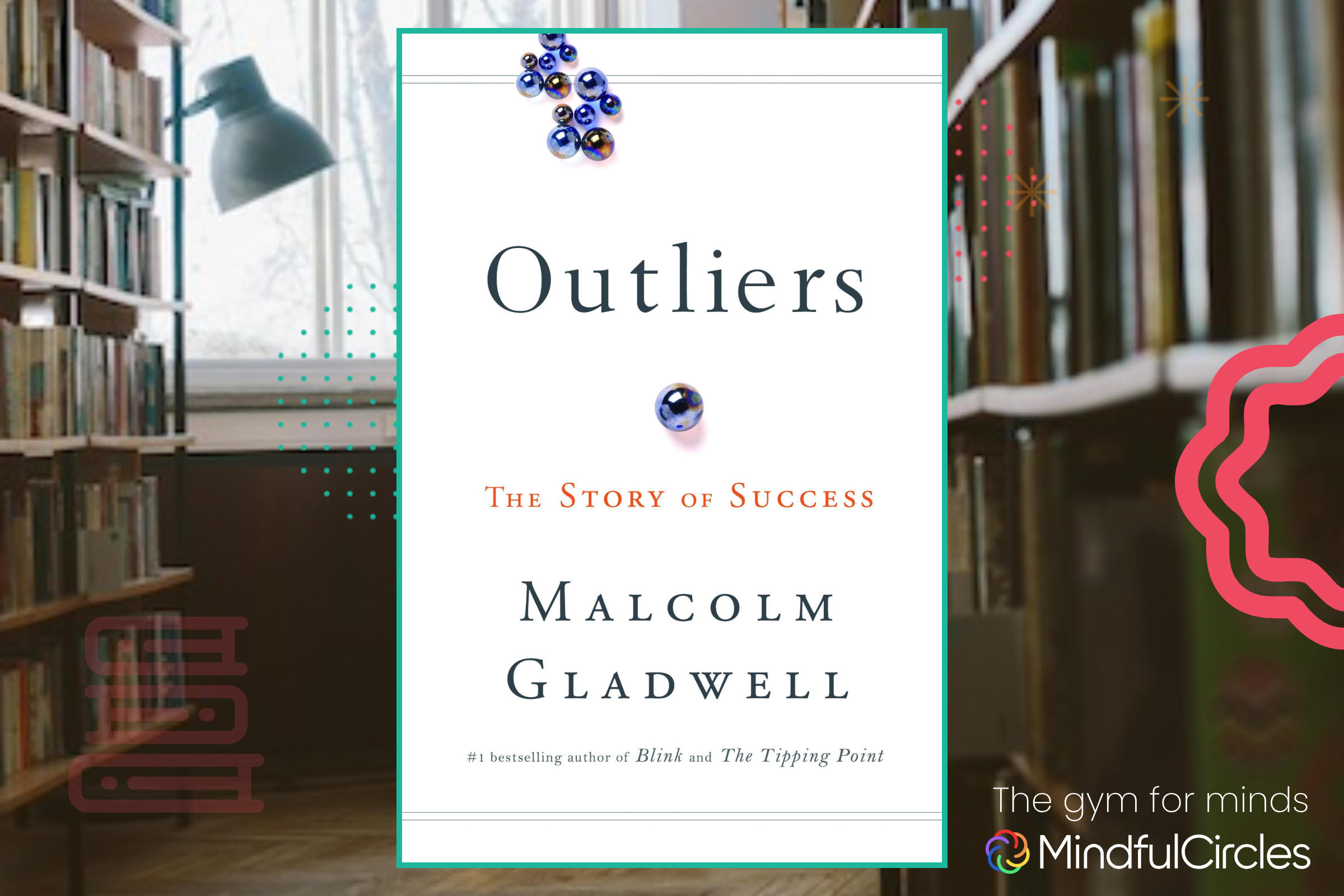

The Man Behind the Book
Malcolm Gladwell was born in England in 1963 and grew up in rural Ontario, Canada. His father was an English mathematics professor. His mother, Joyce, was a Jamaican-born psychotherapist. He studied history at the University of Toronto, worked as a business and science reporter at The Washington Post, and has been a staff writer at The New Yorker since 1996.
His first two books, The Tipping Point (2000) and Blink (2005), turned him into one of the most influential non-fiction writers of his generation. He has a rare gift: taking a piece of academic research, wrapping it in a story, and making it feel like a secret you were always meant to know. He later brought that same voice to his podcast, Revisionist History.
Outliers: The Story of Success (2008) is his most personal book, although that only becomes clear at the very end. After 280 pages about hockey players, software pioneers and airline pilots, Gladwell turns to his own family. He traces how his mother, a woman of mixed heritage in colonial Jamaica, got the scholarship that took her to England, and how that chance depended on choices, privileges and sacrifices made by generations before her. The book about other people’s success ends as a book about the debts behind his own.
The Core Idea
We love the story of the self-made individual. The genius in the garage. The founder who saw what nobody else saw. The athlete born with a gift.
Gladwell’s argument is that this story is not false, but it is badly incomplete. Talent and effort matter. But so do the year you were born, the opportunities that happened to be near you, the culture you inherited, and the hidden advantages that compound quietly over time.
No one, not rock stars, not professional athletes, not software billionaires, and not even geniuses, ever makes it alone.
The book’s question is not “what are successful people like?” It is “where did they come from?” Change the question, and the picture of success changes completely.
The Matthew Effect
The book opens with a curious fact about Canadian ice hockey. Look at the birthdays of elite junior players and an unusual number were born in January, February and March.
The reason is simple. The cut-off date for youth hockey in Canada is 1 January. A boy born in January is playing against boys born in December of the same year, almost a full year younger. At age nine, that is a big difference in size and coordination. The older boy looks more talented, so he is picked for the better team. The better team gets better coaching and more practice. By fourteen, he really is better. A small, arbitrary advantage has turned into a real one.
Gladwell borrows a name for this from the sociologist Robert Merton: the Matthew Effect, after the line in the Gospel of Matthew, “For unto every one that hath shall be given.” Those who start with a little advantage are given more, and the gap grows.
What we call talent is often an early head start that was then fed and rewarded.
Many of the gifts we credit to people were first given to them.
The 10,000-Hour Rule
The most famous idea in the book comes from the work of the psychologist Anders Ericsson, who studied violinists at a music academy in Berlin. The best performers were not the ones with the most natural ability. They were the ones who had practised the most, and by their early twenties, the very best had accumulated around ten thousand hours.
Gladwell uses this to tell two stories. The Beatles played hundreds of all-night sets in the clubs of Hamburg between 1960 and 1962, sometimes eight hours a night, before anyone outside Liverpool had heard of them. Bill Gates, as a teenager in Seattle, had access to a school computer terminal in 1968, at a time when almost nobody did, and then found further ways to program for hours every week through his teens.
The lesson has two halves, and most people only remember the first. Yes, mastery takes an enormous amount of practice. But the chance to put in those hours is itself an opportunity. Somebody has to give you the stage, the computer, the time.
The Trouble with Geniuses
Two men with extraordinary minds stand at the centre of the book’s middle section.
Chris Langan has an IQ estimated at around 195. He grew up in poverty in Montana with an abusive stepfather. He lost a scholarship because his mother failed to fill in a financial aid form, and when he asked for a change to his class schedule, the college refused. He ended up working on a horse farm, reading and thinking alone.
Robert Oppenheimer was also brilliant. As a student at Cambridge, he tried to poison his tutor. Yet he talked his way out of expulsion and went on to lead the Manhattan Project. The difference, Gladwell argues, was not intelligence. It was what the sociologist Annette Lareau calls “concerted cultivation”: a middle-class upbringing in which children are taught to speak up, negotiate and expect institutions to listen to them.
Gladwell calls this practical intelligence. It is learned at home, it is rarely taught at school, and it opens doors that raw brilliance cannot.
Intelligence opens the door. Knowing how to ask is what gets you through it.
Cultural Legacies
The final section argues that we carry habits from cultures and histories we may never have consciously known.
Gladwell’s most dramatic example is a series of plane crashes involving Korean Air in the 1990s. Reviewing cockpit recordings, he argues that junior officers saw danger coming but spoke to the captain too indirectly, softening their warnings out of respect for hierarchy. Once the airline trained crews to speak directly, its safety record transformed.
He also explores why students from East Asian backgrounds often persist longer on hard mathematics problems, linking this to centuries of patient, year-round labour in rice paddies. And he looks at the KIPP schools in New York, where children from poorer families closed much of the achievement gap simply by spending more time learning, particularly over the long summer holidays when better-off children kept learning at home and others fell behind.
The point is the same throughout. Where you come from is not only a story about you. It is a set of habits you inherited before you could choose them.
The Cost and the Critics
Outliers sold millions of copies and changed how many people talk about success. It has also been one of the most criticised popular science books of its time.
The 10,000-hour rule drew the sharpest response. Anders Ericsson, whose research it was based on, said publicly that Gladwell had misunderstood it. Ten thousand was an average, not a threshold, and the key was not hours alone but deliberate practice: focused, effortful work at the edge of your ability, with expert feedback. A large 2014 review of the research also found that practice explains a meaningful but much smaller share of skill differences than the book implies.
Other examples have been questioned too. Later studies found the birth-month effect in hockey to be real but smaller than the book suggests. Aviation experts have argued that the Korean Air story underplays technical, training and organisational failures. And the rice paddy argument rests on broad cultural claims that are hard to test.
There is also a criticism of style. Gladwell is a superb storyteller, and stories are chosen to fit a point. That can make a thesis feel more certain than the evidence allows. Some readers come away believing effort does not matter, or that success is all luck, which is not quite what the book says either.
The insight about hidden advantage is important and durable. Many of the specific examples are simpler than the reality. Both are part of an honest reading.
What the Book Is Really About
Stripped of the hockey statistics and the cockpit transcripts, Outliers is a book about one quiet truth: nobody is entirely self-made.
For ambitious people, that can feel like a threat. If our success was partly given to us, is it still ours? Gladwell’s answer is gentler than it first sounds. Seeing the hidden help does not shrink what we have achieved. It places it in a wider web of people, timing and circumstance.
That recognition opens two doors. The first is gratitude: for the parents, mentors, accidents of timing and open doors that carried us further than our effort alone could. The second is responsibility: if opportunity shapes outcome, then the opportunities we create for others, the people we mentor, hire and give a first chance to, may be the most important work we ever do.
Success is never a solo performance. It is a story with many authors, most of whom never get credited.
End of Summary
What to sit with:
Here are three questions to reflect on, each rooted in a core concept from the book:
- (The Matthew Effect) What early advantage, small at the time, has quietly compounded in your life, and who or what gave it to you?
- (The 10,000-Hour Rule) Where in your life are you counting hours rather than truly practising at the edge of your ability?
- (Cultural Legacies) What habit did you inherit from your family or culture, around speaking