

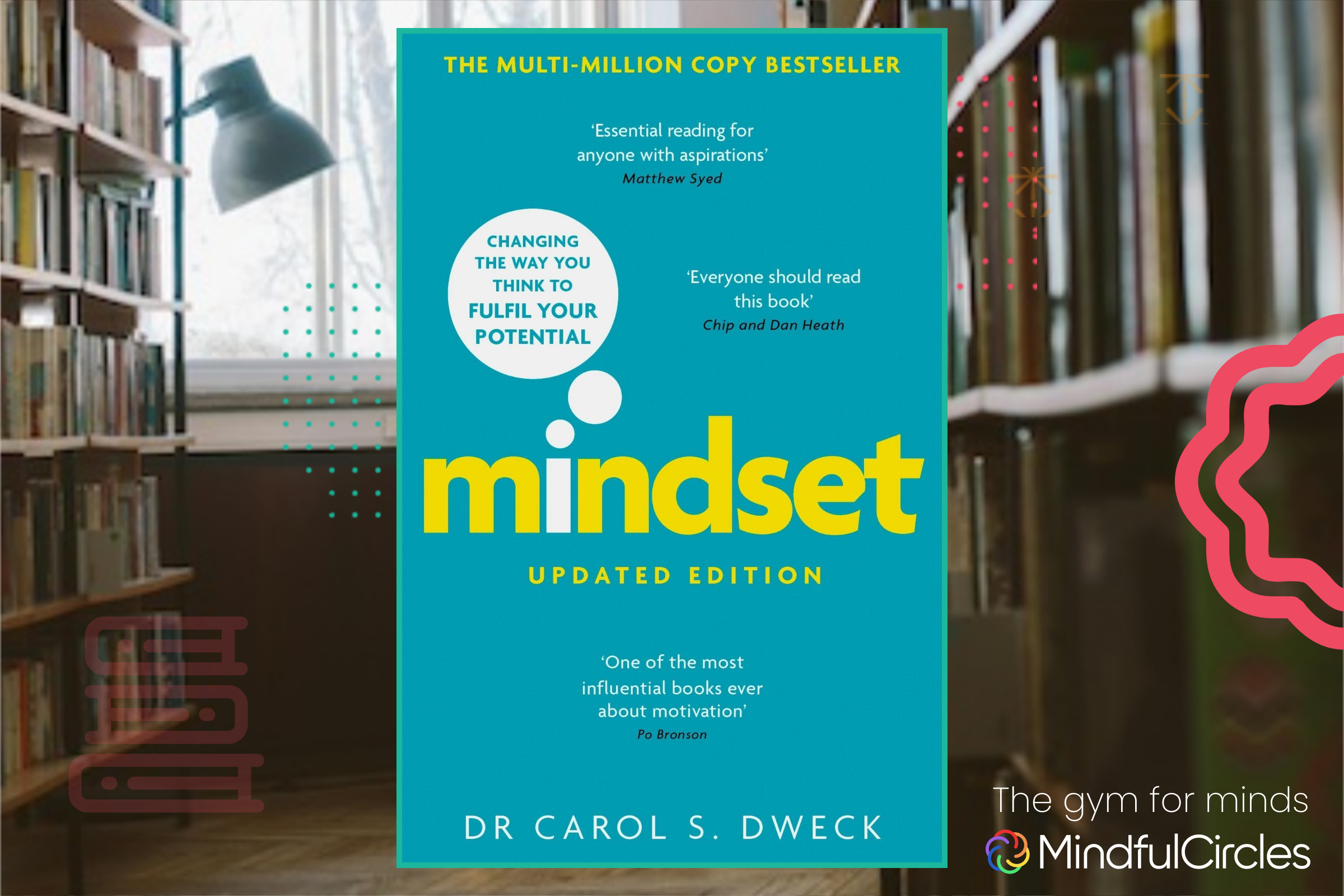

The Core Idea
Carol Dweck, a Stanford psychologist, spent decades studying why some people crumble under failure while others grow stronger. Her answer was not talent, IQ, or confidence — it was a quiet belief each person carries about the nature of their own abilities.
She named the two beliefs the fixed mindset and the growth mindset.
The fixed mindset says: my intelligence, my talent, my character are carved in stone. The job of my life is to prove I have enough.
The growth mindset says: my intelligence, my talent, my character are starting points. They grow through effort, strategy, and help from others. The job of my life is to develop.
That is the entire book in two sentences. The rest is consequences.
Why It Matters
The fixed mindset turns life into a test. Every situation becomes: Will I succeed or fail? Will I look smart or dumb?
The growth mindset turns life into a process. Every situation becomes: What can I learn here?
Dweck’s research is unflinching: the fixed mindset doesn’t just feel worse, it performs worse. People who believe ability is fixed avoid challenges, hide mistakes, lie about results, and surround themselves with people who make them feel superior. People with a growth mindset seek challenge, absorb criticism, and are inspired rather than threatened by the success of others.
“Becoming is better than being.”
Ability and Achievement
Dweck’s classic experiment: children solve an easy puzzle, then half are told “you must be smart at this” and half “you must have worked hard at this.” Offered a second task — easier or harder — almost all the smart children chose easy; almost all the hardworking children chose hard.
Same children. One sentence of praise was enough to shape which world they wanted to live in.
This is why Dweck is careful with the word smart. Praising a trait tells someone your worth must be protected. Praising effort and strategy tells them your worth is in what you do, and what you do can grow.
Business and Leadership
The fixed-mindset CEO needs to be the smartest person in the room. They surround themselves with yes-people, take credit for success, assign blame for failure, and cannot tolerate being wrong. Dweck names Lee Iacocca at Chrysler and the Enron executives — leaders whose collapse was psychological before it was strategic.
The growth-mindset CEO asks questions, hires people smarter than themselves, treats failure as data. Jack Welch at GE, Anne Mulcahy at Xerox, Lou Gerstner at IBM — leaders who turned around enormous organisations through learning, listening, and developing others.
Growth mindset in business is not soft. It is what allows a leader to hear bad news without breaking and change course without losing identity.
Sport
Sport is where the fixed mindset hides best, because it’s where we most want to believe in natural talent.
Michael Jordan was cut from his high school varsity team. Mia Hamm said the most important attribute in a soccer player is mental toughness — the willingness to keep showing up after being beaten.
The fixed mindset in sport says: if I have to try hard, that proves I’m not gifted. The growth mindset says: talent is the floor. Work is the building.
Relationships
Mindsets shape love too.
The fixed mindset believes compatible couples just understand each other. Conflict means the relationship is wrong. Effort means it’s not meant to be.
The growth mindset believes even great relationships require communication, repair, and conscious cultivation. Conflict is information. Effort is the practice.
The same logic applies to friendships, shyness, and bullying. The fixed-mindset victim believes something is wrong with me. The growth-mindset survivor believes something happened to me, and I can grow through it. The difference is not denial of pain — it is what the pain is allowed to mean.
Parents, Teachers, Coaches
Every message we send to a child is interpreted through one of these two lenses.
“You’re so smart” — fixed. “I love how you stuck with that” — growth.
“You’re a natural” — fixed. “You found a really interesting way to do that” — growth.
Dweck’s argument is not to withhold praise but to praise the process — effort, strategy, focus, choices — rather than the trait. The trait can be threatened. The process can always be deepened.
The same applies to employees, partners, and to oneself.
Changing Mindsets
Mindsets are not personality. They are habits of belief, and they can change. Dweck offers a four-step practice:
One — Hear the fixed-mindset voice. It speaks in absolutes. I’m not good at this. They’ll see I’m a fraud.
Two — Recognise you have a choice. The voice is a habit, not the truth.
Three — Talk back in a growth-mindset voice. Maybe I’m not good at this yet. Maybe the discomfort is what growth feels like.
Four — Take the growth-mindset action. Sign up. Try the hard one. Ask the question. Tell the truth.
This is not positive thinking. It is the slow practice of meeting yourself with curiosity instead of judgment.
“No matter what your ability is, effort is what ignites that ability and turns it into accomplishment.”
Notable Criticisms
Mindset has shaped a generation of educators, coaches, and leaders, but it has not gone unchallenged.
Replication. The original effort-praise studies have been retested, and some have failed to reproduce the dramatic effects Dweck reported. The effect appears real but smaller and more context-dependent than the book suggests.
False growth mindset. Schools and companies have adopted the language without the substance — posters on walls, effort praised even when the strategy was wrong. Dweck herself has warned that growth mindset is not a slogan.
Structural critique. Telling a child in a failing school “you can grow your abilities” without changing the conditions of the school places the burden of systemic failure on the individual. Mindset is a powerful inner posture — but it is not a substitute for resources, opportunity, or justice.
Dweck’s response to all three has itself been growth-minded: she has revised and complicated her own claims in the years since publication. The book is the beginning of a conversation, not the end of one.
“The passion for stretching yourself and sticking to it, even (or especially) when it’s not going well, is the hallmark of the growth mindset.”
What to Sit With
For our circle, three questions worth holding:
Where in my life am I still trying to prove rather than improve?
Whose success threatens me — and what is that telling me about my own mindset?
What is the one challenge I have been avoiding because I am afraid of what failing at it would mean about me?